


Texas Instruments LSF0002 Auto-Bidirectional Translator
Texas Instruments LSF0002 Auto-Bidirectional Translator does not require a DIR pin, allowing minimum system effort (PMBus, I2C, SMBus, etc). The LSF0002 supports up to 100MHz up translation and greater than 100MHz down translation at ≤30pF capacitive load and up to 40MHz up or down translation at 50pF capacitive load, which allows the LSF0002 to support more consumer or telecom interfaces (MDIO or SDIO).
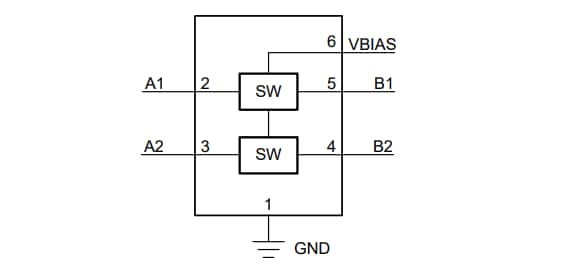
The TI LSF0002 Auto-Bidirectional Translator facilitates 5V tolerance on an I/O port, which makes it compatible with TTL levels in industrial and telecom applications. The LSF0002 can set up different voltage translation levels, which makes it very flexible. Unlike the LSF0x0x, the LSF0002 does not require VREF_A and VREF_B power supplies and the 200kΩ bias resistor. The LSF0002 employs the VBIAS pin, which enables translation by being biased to the same voltage as the lower power supply at the I/Os being translated to and from.
Features
- Provides bidirectional voltage translation with no direction pin
- Supports up to 100MHz up translation and greater than 100MHz down translation at ≤30pF capacitive load and up to 40MHz or down translation at 50pF capacitive load
- Allows bidirectional voltage-level translation between
- 0.95V ↔ 1.8/2.5/3.3/5V
- 1.2V ↔ 1.8/2.5/3.3/5V
- 1.8V ↔ 2.5/3.3/5V
- 2.5V ↔ 3.3/5V
- 3.3V ↔ 5V
- Low standby current
- 5V tolerance I/O port to support TTL
- Low RON provides less signal distortion
- High-impedance I/O pins for EN = Low
- Flow-through pinout for easy PCB trace routing
- Latch-up performance >100mA per JESD 17
- -40°C to 125°C operating temperature range
Applications
- GPIO, MDIO, PMBus, SMBus, SDIO, UART, I2C, and other interfaces in telecom infrastructure
- Enterprise systems
- Communications equipment
- Personal electronics
- Industrial applications
Associated Eval Modules

Texas Instruments 5-8-LOGIC-EVM Evaluation Module
Developed to support leaded Logic devices in the DBV, DCK, DCT, DCU, and DRL packages.
Texas Instruments LSF-EVM Evaluation Module (EVM)
Designed to help evaluate the LSF family of level translators.
Functional Block Diagram