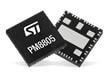

STEF05LAJR

STMicroelectronics
511-STEF05LAJR
STEF05LAJR

Fabricante:

Descripción:
Controladores de voltaje intercambiables en caliente Electronic fuse for 5 V line

Ciclo de vida:
NRND:
No recomendado para nuevos diseños.
Modelo ECAD:
Descargue Library Loader gratis para convertir este archivo para su herramienta ECAD. Conozca más sobre el modelo ECAD.

Disponibilidad

Existencias:
No en existencias
Plazo de entrega de fábrica:
Mínimo: 5000   Múltiples: 5000
Precio unitario:
$-.--
Precio ext.:
$-.--
Est. Tarifa:
El envío de este producto es GRATUITO

Precio (USD)

Cantidad Precio unitario
Precio ext.
Envase tipo carrete completo (pedir en múltiplos de 5000)
$0.694 $3,470.00
$0.662 $6,620.00

Atributo del producto Valor de atributo Seleccionar atributo
STMicroelectronics
Categoría de producto: Controladores de voltaje intercambiables en caliente
RoHS:  
Reel
Marca: STMicroelectronics
Tipo de producto: Hot Swap Voltage Controllers
Serie: STEF05L
Cantidad de empaque de fábrica: 5000
Subcategoría: PMIC - Power Management ICs
Productos encontrados:
Para mostrar productos similares, seleccione al menos una casilla de verificación
Seleccione al menos una de las casillas de verificación anteriores para mostrar productos similares en esta categoría.
Atributos seleccionados: 0

MXHTS:
8542399901
CNHTS:
8542390000
CAHTS:
8542390000
USHTS:
8542390090
ECCN:
EAR99

LM5060 High-Side Protection Controllers

Texas Instruments LM5060 High-Side Protection Controllers with Low Quiescent Current offers intelligent control of a high-side N-channel MOSFET during normal on/off transitions and fault conditions. The constant rise time of the output voltage results from the inrush current control. Both an Input UVLO (with hysteresis) and a programmable input OVP are provided, with an enable input offering a remote on or off control. The initial start-up VGS fault detection delay time, the transition VDS fault detection delay time, and the continuous over-current VDS fault detection delay time is programmed from a single capacitor. The MOSFET is latched off until either the enable input, or the UVLO input is toggled low and then high when a detected fault condition persists longer than the allowed fault delay time.