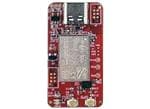

M1-B1-USB

Signetik
544-M1-B1-USB
M1-B1-USB

Fabricante:

Descripción:
Módulos celulares Nordic Cellular CAT M-1 Nordic BLE Intelligent IoT USB Connector

Modelo ECAD:
Descargue Library Loader gratis para convertir este archivo para su herramienta ECAD. Conozca más sobre el modelo ECAD.

Disponibilidad

Existencias:
No en existencias
Plazo de entrega de fábrica:
Mínimo: 100   Múltiples: 100
Precio unitario:
$-.--
Precio ext.:
$-.--
Est. Tarifa:
El envío de este producto es GRATUITO

Precio (USD)

Cantidad Precio unitario
Precio ext.
$85.92 $8,592.00
5,000 Presupuesto

Atributo del producto Valor de atributo Seleccionar atributo
Signetik
Categoría de producto: Módulos celulares
RoHS:  
SigCell
700 MHz to 2.2 GHz
8 dBm
UART, USB
4.45 V
5.5 V
600 mA
- 40 C
+ 85 C
u.FL
38 mm x 20.5 mm x 7 mm
Cellular, LTE, NBIoT
Marca: Signetik
Estilo de montaje: Screw
Voltaje de alimentación operativo: 5 V
Producto: Cellular Modules
Tipo de producto: Cellular Modules
Protocolo: Bluetooth, BLE - 802.15.1: BLE, Bluetooth 5.0
Protocolo: GPS, GLONASS: GNSS, GPS
Cantidad de empaque de fábrica: 100
Subcategoría: Wireless & RF Modules
Nombre comercial: SigCell
Tipo: BLE USB Module
Peso de la unidad: 5 g
Productos encontrados:
Para mostrar productos similares, seleccione al menos una casilla de verificación
Seleccione al menos una de las casillas de verificación anteriores para mostrar productos similares en esta categoría.
Atributos seleccionados: 0

USHTS:
8517620090
JPHTS:
851762090
TARIC:
8517620000
ECCN:
5A992.C

SigCell IoT Cellular BLE USB Module

Signetik SigCell IoT Cellular BLE USB Module is based on the Nordic nRF9160 LTE-M/NB-IoT SIP and the Nordic nRF52840. The nRF52840 is FCC, Verizon, and AT&T certified. The device is designed for intelligent IoT applications with the capability of interfacing host systems via the USB interface. The USB interface enumerates as two UARTs. The host can use the first UART to control the cellular connection via AT commands or Signetik’s API. Signetik’s API supports various IoT protocols like HTTP REST, CoAP/CBOR, MQTT, TLS, and more. The second UART is used with an HCI interface that is recognizable by most operating systems, out of the box.